
Clay County Criminal Court Cases
Clay District Court and Clay Circuit Court share a clerk but do different work. Kentucky District Court handles misdemeanors, violations, traffic and city-ordinance matters. It also conducts arraignments and felony probable-cause proceedings. An indicted felony moves to Kentucky Circuit Court, which tries felonies and capital offenses. Appeals from District Court also reach Circuit Court.
The Clay County Justice Center houses both divisions. Circuit Court Clerk Leslie Phillips maintains their criminal case records at 316 Main Street, Suite 108, Manchester. The clerk can distinguish a District case from a Circuit case and explain whether an old file is onsite or archived. No separate Manchester municipal docket is needed for ordinary city charges because District Court hears those matters.
The official Circuit Court description shows why felony case records leave the lower-court stage after indictment.
That jurisdiction split helps a requester ask for the right Clay County file instead of treating every charge as one continuous docket.
Two Clay County Felony Stages
A felony allegation may appear in two Clay County court stages. The first record begins in District Court with a complaint, initial appearance, bond decision, and a probable-cause hearing or waiver. A grand jury indictment then creates or advances the Circuit Court case. Searching only the District file can miss the later plea, trial, judgment, and sentence. Searching only Circuit Court can hide the initial bond and preliminary-hearing trail.
A case number is the best link between records, but the approximate filing year and the defendant's full name also help. Kentucky case numbers commonly encode the year, case type, and sequence. Ask the clerk whether related District and Circuit numbers exist when a felony search returns a short or apparently unfinished docket.
The official District Court jurisdiction page depicts the lower court's misdemeanor and preliminary-hearing role.
It confirms that a felony's early Clay County record and post-indictment record may sit in different divisions under the same clerk.
Searching Clay County Case Records
There is no verified free public Clay County trial-docket portal. Begin with the clerk when the goal is an official docket, order, judgment, or certified copy. AOC FastCheck and One-Time Request provide statewide, court-derived criminal-record reports, while CourtNet 2.0/KYeCourts is login-gated. Those tools can locate reported Kentucky court history, but neither replaces the source file held by the clerk.
- Gather the defendant or party name, approximate year, and case number if available.
- Call 606-598-3663 or visit the clerk during weekday counter hours and identify the matter as criminal.
- Ask whether the record belongs to District Court, Circuit Court, or both stages of a felony.
- Request the docket and final disposition, then name any complaint, indictment, order, or judgment needed.
- Specify plain or certified copies and confirm price, archive retrieval, delivery method, and turnaround.
| Lookup Input | Type | Required | Use |
|---|---|---|---|
| Case number | Text | Best identifier | Links a request to the precise docket |
| Defendant or party name | Text | Alternative | Use careful spelling and known aliases |
| Approximate year | Year | Recommended | Separates similar names and narrows archives |
| Court division | Choice | If known | District or Circuit criminal case |
| Document and copy type | Text/choice | For copies | Name the filing and plain or certified form |
The AOC public menu shows the FastCheck and One-Time Request entry routes.
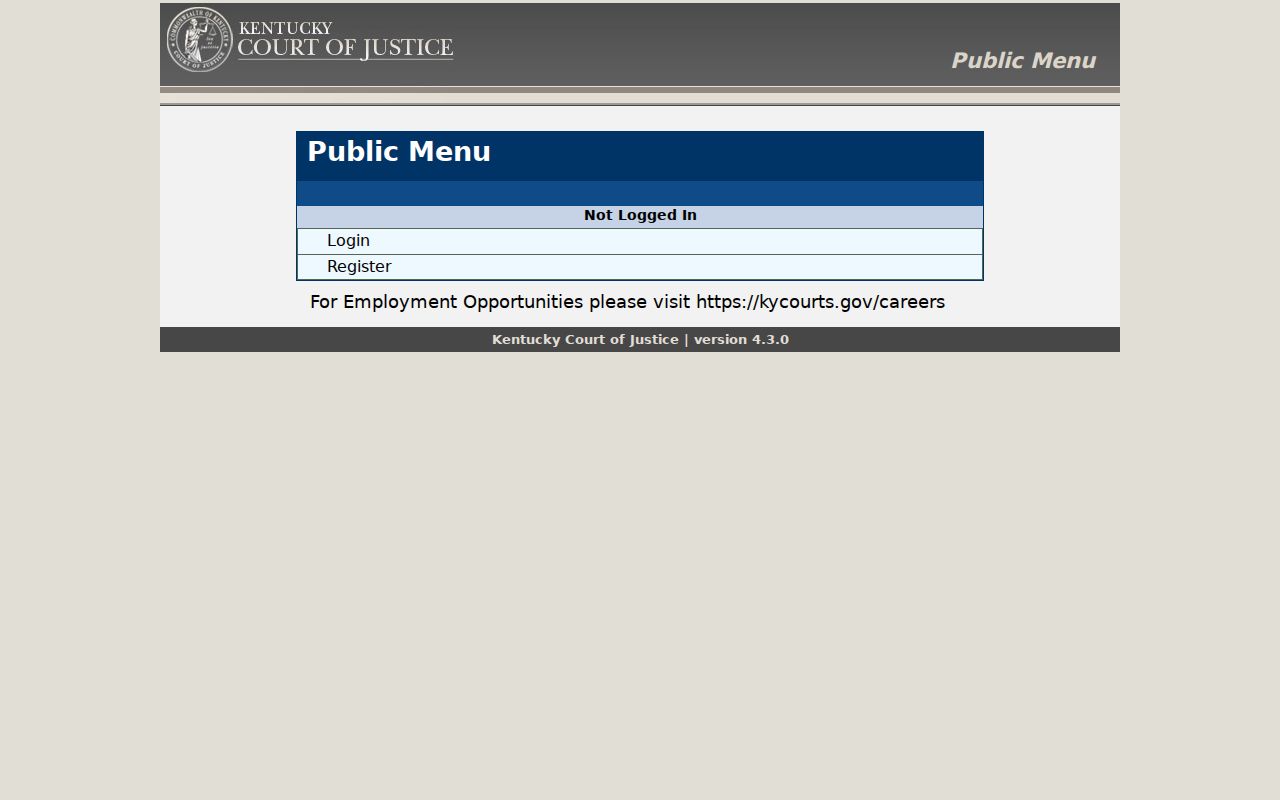
Use the report as a lead, then verify the charge and outcome in the Clay County criminal case file.
Clay Court Phone and Counter Routes
A missing online result is not proof that no Clay County criminal case exists. New filings can take time to reach a statewide report, names can be entered differently, and sealed or expunged matters do not appear like open files. The clerk's current statewide listing controls over the older county directory, which shows a different clerk and address. Verify the Main Street location before mailing a request or making the trip.
The Kentucky Court of Justice records-request instructions explain the official fallback for trial-court material. Give the clerk a narrow description and ask whether an older record must be retrieved. Posted courthouse payment methods include cash, check, and money order, but the Clay page does not publish copy, certification, or search fees. Ask first. Do not assume ePay covers record-copy orders.
The official request page provides the route when a report product cannot supply the desired document.
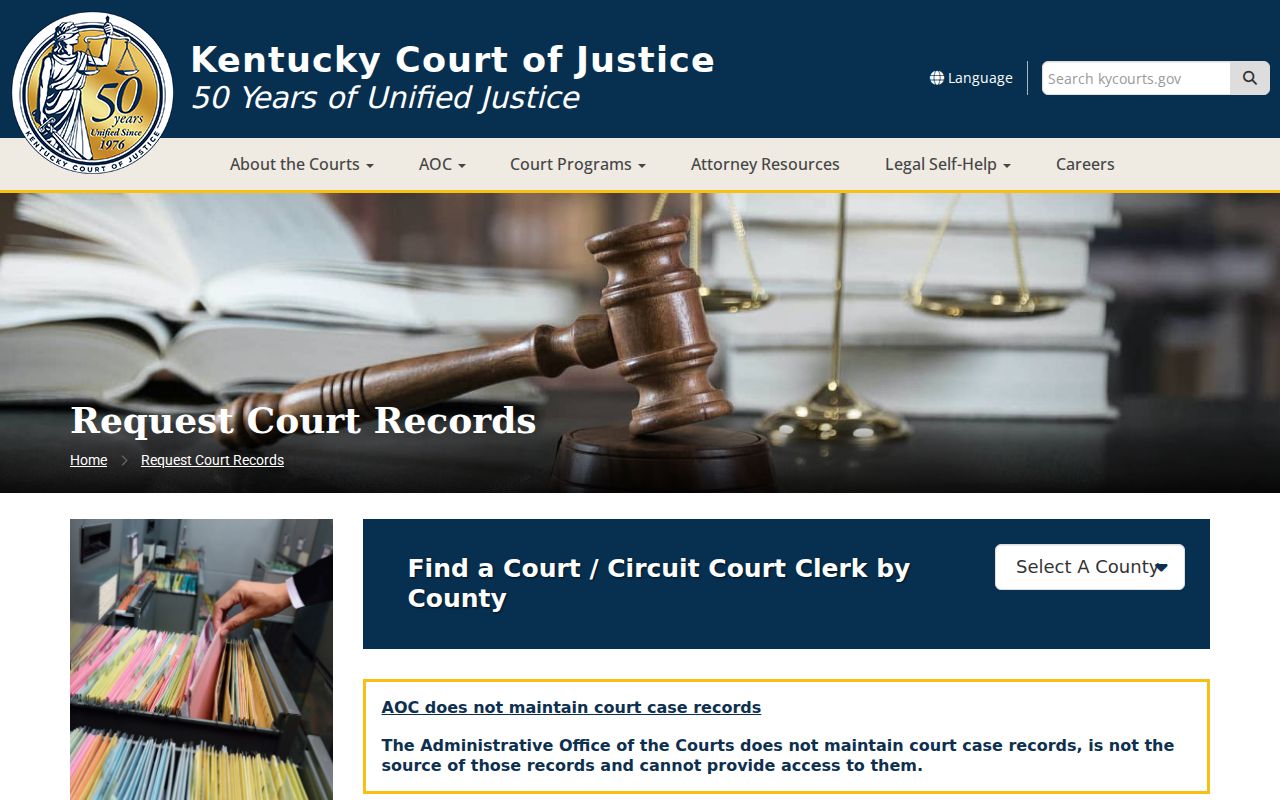
That distinction matters when the needed item is a signed judgment, a certified disposition, or an archived docket rather than a name-based summary.
Note: Call the clerk before travel to confirm hours, retrieval needs, copy cost, and whether electronic delivery is available for the requested Clay record.
Inside a Clay County Case File
The docket is the chronological index to a Clay County criminal court case. It may list a complaint, service or arrest event, pleas, hearings, grand-jury action, motions, orders, trial or plea, and final judgment. The underlying documents carry more detail. Read the disposition for each count because a charge may be dismissed, amended, merged, acquitted, or end in conviction.
| Case Number & Court | County, division, filing date, case type, status, and the number that identifies the docket. |
|---|---|
| Charging Document | Complaint or indictment, charge description, KRS citation, class, count, and alleged offense date. |
| Docket Entries | Chronological filings, service, pleas, motions, orders, hearings, warrants, and later case events. |
| Hearing Dates | Date, time, hearing type, courtroom, and judge when entered on the docket. |
| Disposition & Judgment | The recorded result for each count and the date of the court's final action. |
| Sentence & Conditions | Custody term, probation, fines, costs, restitution, and public conditions stated in the order. |
Bond data can also appear, including amount, type, conditions, and later modifications. It is a court order, not the same thing as the jail's intake snapshot. For the sequence that begins before charges are filed, the county's Arrest Lookup explains the separate agency and booking records.
Reading Clay Criminal Docket Terms
Short docket labels can change the meaning of a result. An indictment is a formal felony accusation, not a finding of guilt. A disposition is the result recorded for a charge. Nolle prosequi means the prosecutor chose not to continue that charge at the time. A dismissal ends a charge without conviction, while an acquittal is a not-guilty trial outcome.
- Arraignment
- The hearing where charges are formally presented and a plea is addressed.
- Docket
- The dated list of case events, filings, hearings, and court actions.
- Indictment
- A grand jury's formal felony accusation that moves the matter into Circuit Court.
- Disposition
- The recorded outcome of the whole case or an individual count.
- Judgment
- The court's formal ruling, including conviction and sentence when applicable.
Pending does not mean convicted. Released describes custody, not the case result. A reader reviewing a Clay County criminal court record should match each charge to its own disposition and read the signed order when the docket label is unclear.
How a Criminal Case Moves
A citation or arrest can lead to a complaint and prompt District Court appearance. District Court addresses arraignment and release or bond. Misdemeanors remain there through plea, trial, and judgment. In a felony matter, the probable-cause stage or waiver precedes grand-jury review. An indictment then moves the prosecuted felony into Clay Circuit Court for arraignment, discovery, motions, and pretrial work.
Case flow: Charges Filed → Arraignment → Pretrial → Plea or Trial → Disposition → Sentencing
A conviction may then produce probation, incarceration, appeal, or later revocation filings. Each step leaves a different record. The complaint states the early allegation, the indictment identifies the felony counts pursued, and the judgment controls the final conviction and sentence.
Clay Charges Choose the Court
Kentucky offense class helps route the case. Class A through D felonies and capital offenses are Circuit Court matters after indictment. Class A and B misdemeanors, violations, traffic matters, and ordinances belong in District Court. A felony class can also change between booking, indictment, plea, and judgment, so the final order is the sound source for what was proved and sentenced.
A Class D label does not by itself establish eligibility for expungement. Kentucky limits conviction expungement to the statutory list and adds completion, waiting-period, pending-charge, and prior-history conditions. Anyone reviewing their own Clay County criminal case for possible clearing should use the KRS citation and judgment, then consult the current AOC certification and petition process.
Federal Cases Beyond Clay Courts
Federal criminal cases involving Clay County do not appear as Clay Circuit or District Court files. They belong to the U.S. District Court for the Eastern District of Kentucky. PACER is the official federal docket system and requires registration. Its current fee schedule may charge by the page, with a quarterly low-usage waiver under federal rules.
The PACER home screen marks this separate court-record layer.
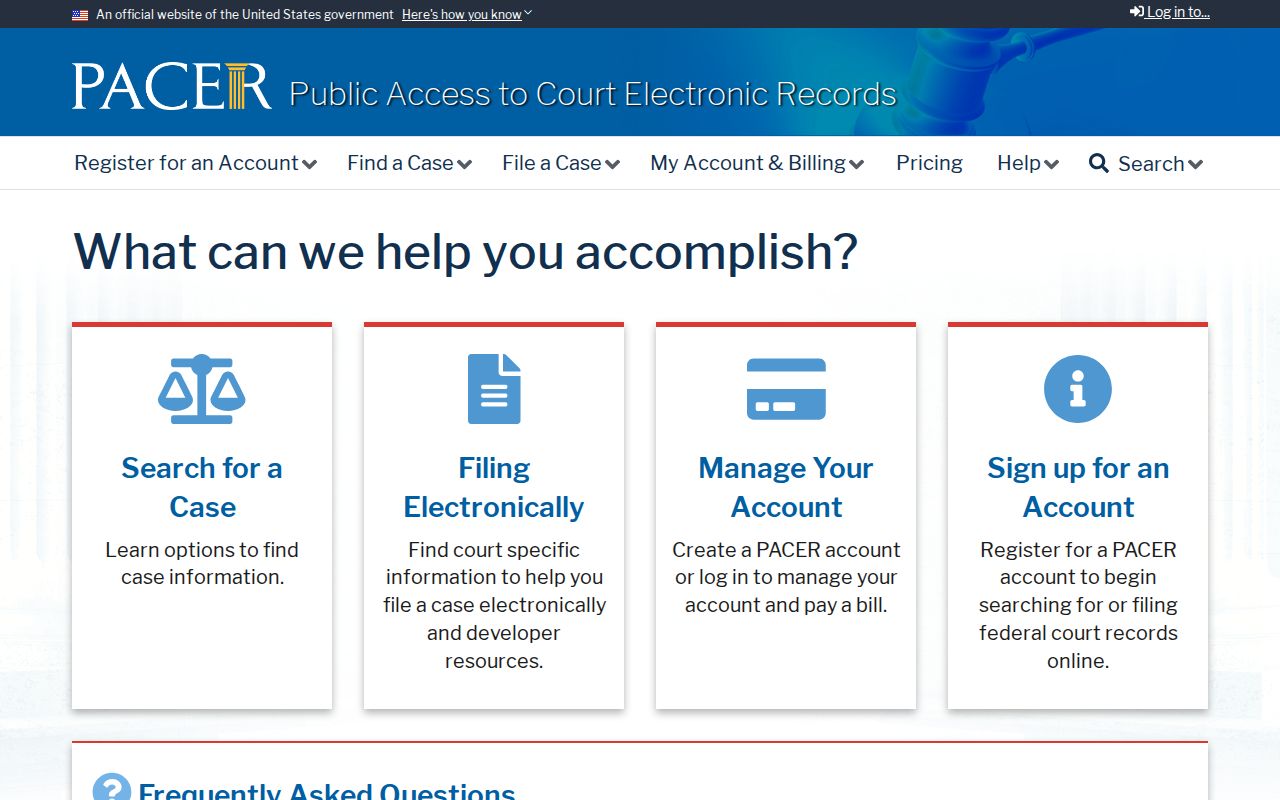
Use the federal district clerk or PACER for the official file. The Clay clerk cannot supply federal pleadings, and a federal custody search is also separate from state or county custody records.
Case Record Access & Restrictions
The Kentucky Open Records Act provides access to public-agency records subject to exemptions, but the record custodian and court rules still control the response. Court records go to the Circuit Court Clerk. Juvenile matters, sealed or expunged files, protected victim or minor details, and sensitive identifiers are not ordinary open material. Social Security numbers and full financial-account data may be redacted.
If a Clay County criminal case does not appear in an online report, ask the clerk whether it is in District Court, Circuit Court, archived, sealed, or recorded under a different spelling. A written request should seek an existing docket or named document rather than ask the office to create a summary. When releasable and protected content can be separated, redaction may permit access to the balance.
Verify the source record: CourtNet and AOC reports summarize reported court data. The signed order and clerk-maintained file remain the official evidence of disposition.